What Is Umbrella Insurance and Who Needs It?
 By Raimundo Oliveira ·
· 4 min read
Quick summary: Umbrella insurance adds extra liability coverage, usually $1 million or more, on top of your auto and homeowners policies. It typically costs a few hundred dollars a year and makes sense when your net worth or income exceeds your existing liability limits.
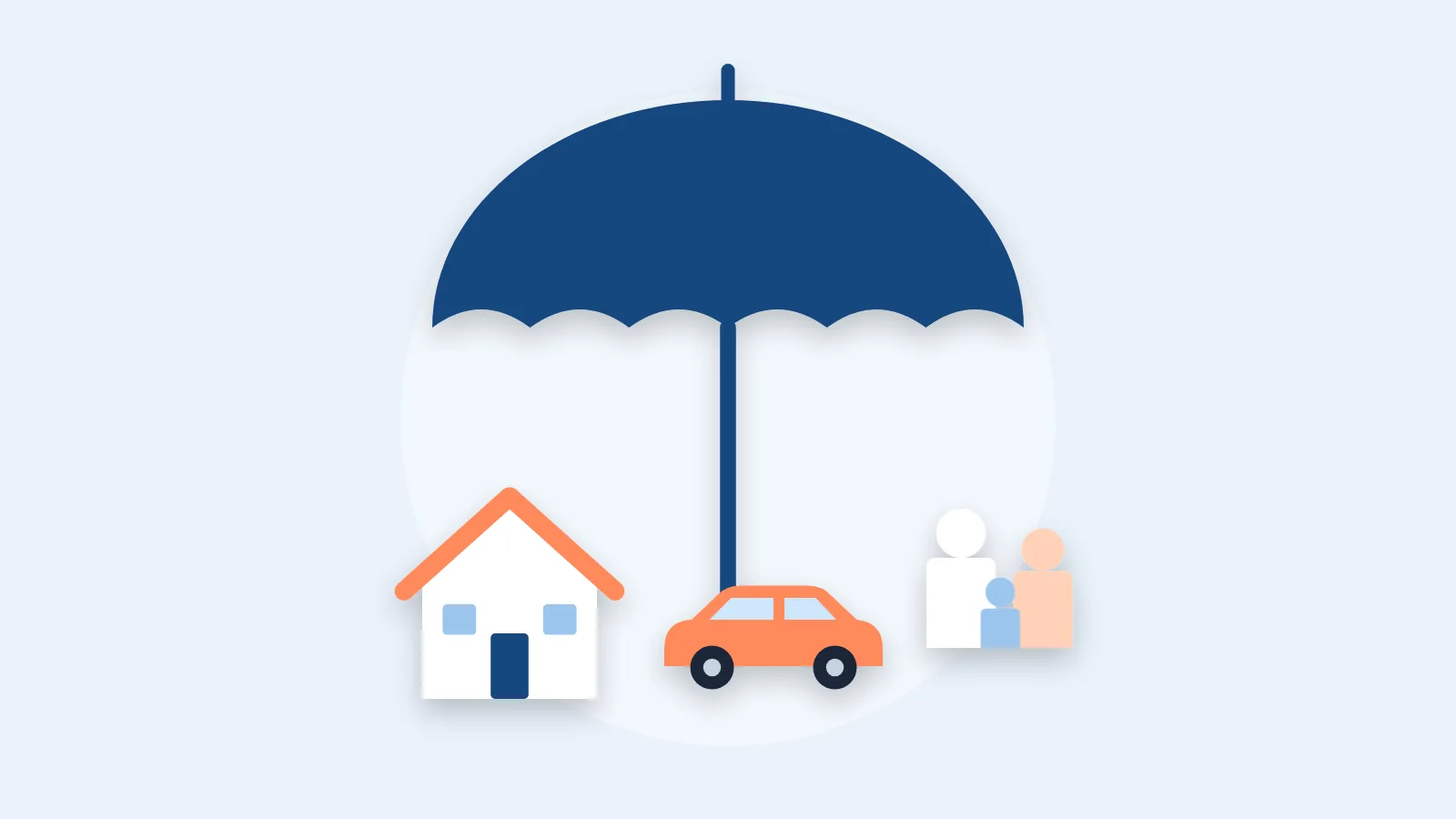
A serious car accident or an injury on your property can lead to a lawsuit far larger than your auto or homeowners liability limits. Umbrella insurance adds an extra layer of liability protection — typically $1 million or more — for a few hundred dollars a year. Here is how it works, who needs it and what it costs.
How umbrella insurance works
An umbrella policy sits on top of your auto, homeowners or renters liability coverage. When a covered claim exceeds those limits, the umbrella pays the rest, up to its own limit.
Example
| Item | Amount |
|---|---|
| Court judgment after an at-fault crash | $900,000 |
| Auto policy bodily injury limit | $250,000 |
| Without umbrella, you owe personally | $650,000 |
| $1 million umbrella pays | $650,000 |
| You owe | $0 |
What umbrella insurance covers
- Bodily injury and property damage you cause (car accidents, guests injured at your home, a dog bite).
- Legal defense costs, often paid in addition to the limit.
- Personal injury claims such as libel, slander and defamation — including statements on social media.
- Some claims your underlying policies don’t cover at all (for example, certain liability abroad), subject to a self-insured retention.
- Coverage for household members, including teenage drivers.
What it does not cover
- Your own injuries or damage to your own property.
- Business activities and professional liability (need business insurance).
- Intentional or criminal acts.
- Contractual liability you agreed to.
- Certain high-risk vehicles or watercraft unless listed.
Who should consider an umbrella policy?
| Risk factor | Why it matters |
|---|---|
| Net worth above your liability limits | Home equity, savings and investments can be targeted in lawsuits |
| High or rising income | Future wages can be garnished |
| Teen drivers in the household | Higher accident risk |
| Pool, trampoline or dog | Common sources of injury claims |
| Rental properties | Tenants and visitors can sue |
| Boats, ATVs, golf carts | Added liability exposure |
| Coaching, volunteering, active social media | Injury and defamation claims |
How much umbrella coverage do you need?
- Start with $1 million — the most common amount.
- Aim for coverage at least equal to your net worth plus a cushion for future earnings.
- Add more if you have several risk factors above or high visibility.
How much does umbrella insurance cost?
Recent 2026 quotes for typical households ranged roughly as follows (annual premiums):
| State | $1 million | $2 million | $5 million |
|---|---|---|---|
| California | $350–$550 | $475–$875 | $950–$1,750 |
| Texas | $400–$750 | $575–$1,125 | $1,175–$2,300 |
| New York | $325–$675 | $475–$975 | $1,000–$2,025 |
| Florida | $600–$1,125 | $1,100–$1,850 | $2,025–$3,275 |
Price depends on the number of drivers and vehicles, driving records, properties, pools, boats and prior claims.
Underlying coverage requirements
Insurers require you to carry minimum liability on your underlying policies before the umbrella kicks in. Common requirements are:
- Auto: often 250/500/100 (or $500,000 combined single limit).
- Home or renters: often $300,000 personal liability.
Raising underlying limits adds some cost, but it is usually cheaper together than buying high limits alone. If you have a gap, you may pay that difference yourself after a claim. See how much car insurance you need.
How to buy an umbrella policy (step by step)
- List your assets, income and risk factors.
- Ask your current auto/home insurer for an umbrella quote — bundling often saves money.
- Raise underlying limits to the insurer’s requirements.
- List every vehicle, driver, property and watercraft on the application.
- Compare at least one quote from another insurer — see how to compare insurance quotes.
- Review annually and after buying property or adding a driver.
Bottom line: if your net worth or income is greater than your auto and home liability limits, a $1 million umbrella policy is one of the most cost-effective protections you can buy — often a few hundred dollars a year.
General information, not personalized insurance or legal advice. Coverage and requirements vary by insurer and state.
Frequently asked questions
What does umbrella insurance cover?
Liability claims that exceed your auto, homeowners or renters limits, including bodily injury, property damage, legal defense and personal injury claims like libel and slander.
How much does a $1 million umbrella policy cost?
Recent 2026 quotes for typical households ranged from about $325 to $1,125 per year depending on the state, drivers, properties and risk factors.
Who needs umbrella insurance?
People whose net worth or income exceeds their liability limits, and households with teen drivers, pools, dogs, rental properties or boats.
What are the underlying requirements for umbrella insurance?
Insurers commonly require auto liability of 250/500/100 and homeowners liability of $300,000 before the umbrella applies.
Does umbrella insurance cover my business?
Generally no. Business activities need a commercial umbrella or business liability policy.
Written by
Raimundo Oliveira
Founder & Editor, AllCover Quotes
Raimundo Oliveira is the founder and editor of AllCover Quotes and the Redevix network of websites. He is a digital publisher and SEO specialist who researches insurance topics using official sources — state insurance departments, government consumer resources and insurers’ own policy documents — and turns them into clear, practical guides. Raimundo is not a licensed insurance agent: his guides are educational and do not replace advice from a licensed professional.
Some links on AllCover Quotes may be partner links. If you request a quote or buy a policy through them we may earn a commission at no extra cost to you. This article is general information, not personalized insurance advice. Learn more.